Industrial Waste Management Systems: An Overview of Technologies, Processes and Applications
Industrial Waste Management Systems are organized frameworks used to identify, collect, separate, treat, recover, store, transport, and dispose of waste generated by industrial activities.
Such systems can be found in manufacturing plants, chemical facilities, food-processing units, metal industries, power facilities, laboratories, construction operations, and other industrial environments.
Industrial waste can take many forms, including solid materials, wastewater, sludge, gases, contaminated packaging, process residues, used oils, damaged components, and other unwanted materials. The appropriate management approach depends on the physical and chemical characteristics of the waste, its source, and applicable environmental requirements.
The development of industrial waste management has been closely connected with industrialization and environmental protection. As production activities expanded, communities and regulators recognized the need to control waste generation and prevent harmful effects on soil, water, air, workers, and surrounding areas.
How industrial waste management works
An Industrial Waste Management System generally begins with identifying where waste is generated. Each waste stream can then be classified according to its characteristics and applicable regulatory category.
A typical management sequence includes:
- Waste identification and classification.
- Separation at the point of generation.
- Temporary collection and storage.
- Treatment or processing where required.
- Recovery, recycling, or reuse where technically appropriate.
- Transportation through approved channels.
- Final disposal according to applicable requirements.
- Documentation, monitoring, and compliance review.
The sequence is not identical for every facility. Hazardous materials may require specialized containment and handling, while ordinary industrial scrap may follow a different pathway.
Main categories of industrial waste
Industrial waste can be grouped into several broad categories. Solid waste may include metal scrap, packaging, ash, process residues, and rejected materials. Liquid waste can include wastewater, chemical mixtures, and contaminated process liquids.
Other categories include hazardous waste, biomedical waste in applicable industrial settings, electronic waste, plastic waste, used oils, and gaseous emissions. Correct classification is important because different waste streams can have different handling, treatment, and documentation requirements.
Importance
Industrial Waste Management Systems are important because poorly controlled waste can affect environmental quality, workplace conditions, and nearby communities. Waste can contain substances that require controlled handling because of their chemical, physical, or biological characteristics.
Effective management also supports resource conservation. Materials that might otherwise become waste can sometimes be recovered, reused, recycled, or returned to an industrial process when technically and legally appropriate.
Protecting soil and water
Improper storage or disposal can allow contaminants to enter soil or water. Leaks from containers, poorly managed storage areas, and uncontrolled discharge can create environmental risks.
Industrial facilities therefore commonly use containment areas, appropriate storage vessels, drainage controls, monitoring systems, and documented handling procedures. The exact controls depend on the waste type and regulatory requirements.
Managing hazardous waste
Hazardous industrial waste may have properties such as toxicity, corrosivity, flammability, or reactivity. Such materials require additional precautions during collection, storage, transportation, treatment, and disposal.
Personnel handling these materials may need appropriate training and protective equipment. Facilities also need suitable labeling, records, emergency procedures, and containment arrangements according to applicable rules.
Supporting resource recovery
Some industrial waste streams contain materials that can be recovered. Metals, certain plastics, solvents, process water, heat, and other resources may have recovery pathways depending on their characteristics.
Resource recovery is different from simply transferring waste from one location to another. It requires suitable separation, processing, quality controls, and an appropriate destination for the recovered material.
Typical industrial waste streams
| Waste stream | Common examples | Possible management approach |
|---|---|---|
| Metal waste | Steel, aluminum, machining residues | Segregation and material recovery |
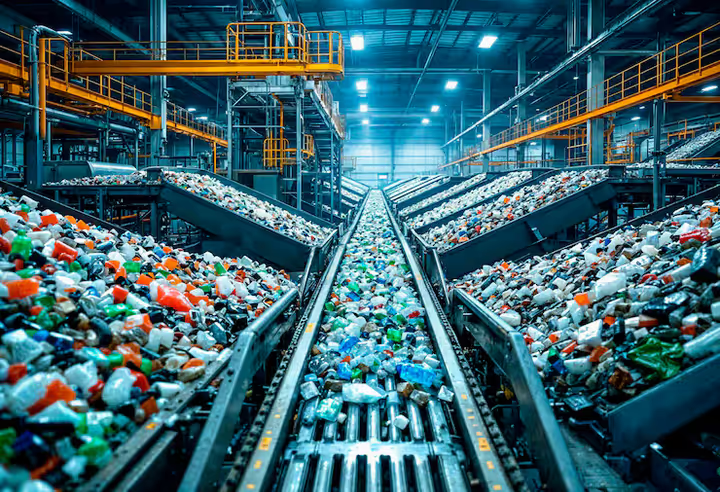
| Plastic waste | Packaging, production scraps | Sorting and recycling |
| Wastewater | Process water, washing water | Treatment and controlled discharge or reuse |
| Sludge | Treatment residues | Characterization and regulated handling |
| Used oils | Lubricants, hydraulic oils | Collection and authorized processing |
| Electronic waste | Circuit boards, equipment | Segregation and regulated recycling |
| Hazardous waste | Reactive or contaminated materials | Controlled storage and treatment |
| Organic waste | Food or biological residues | Composting, digestion, or other treatment |
Recent Updates
From 2024 through 2026, Industrial Waste Management Systems have increasingly incorporated digital tracking, automated sorting, resource recovery, circular-economy principles, advanced treatment, and data-based environmental monitoring.
Digital waste tracking
Digital platforms can record waste generation, storage movements, treatment activities, transportation information, and final destinations. Electronic records can make it easier to trace a waste stream through different stages.
Barcodes, QR codes, weighing systems, sensors, and digital documentation can also reduce manual recordkeeping. These technologies are particularly relevant to facilities handling multiple waste categories.
Automated sorting
Optical sensors, magnetic separation, near-infrared systems, machine vision, and automated conveyors are being used in some waste-processing environments. These technologies can help distinguish materials according to characteristics such as composition, size, shape, or magnetic properties.
The appropriate technology depends on the waste stream. Mixed or contaminated materials can require multiple processing stages before useful separation is achieved.
Circular-economy approaches
Industrial organizations are increasingly examining waste as part of a broader material-flow system. Instead of treating every residual material as something requiring disposal, process engineers can investigate whether selected materials can be reduced, reused, recovered, or recycled.
Industrial symbiosis is another approach in which one facility's residual material may become an input for another process when technical, environmental, and regulatory conditions permit.
Advanced treatment technologies
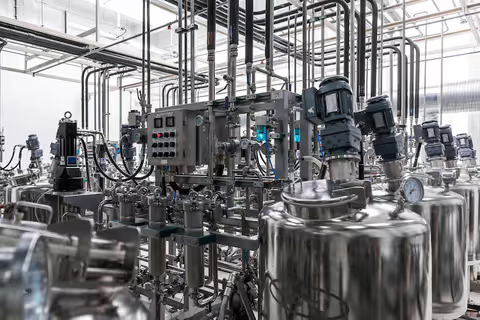
Wastewater and difficult industrial residues may involve membrane filtration, biological treatment, thermal processes, adsorption, advanced oxidation, or other treatment technologies. Selection depends on the contaminants and the required treatment outcome.
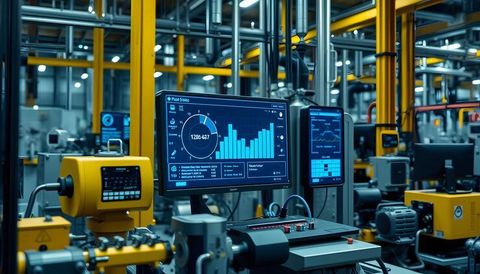
Treatment processes are also becoming more closely monitored through sensors and analytical instruments. Measurements such as pH, conductivity, turbidity, temperature, flow, and specific chemical parameters can support process control.
Data-driven environmental monitoring
Environmental monitoring systems can combine information from treatment plants, storage areas, emissions equipment, and production systems. Historical records can then be analyzed to identify changes in waste generation or treatment performance.
Artificial intelligence and machine learning are also being explored for waste classification, process monitoring, predictive maintenance, and material-flow analysis. Their results depend on the quality and relevance of the underlying data.
Laws or Policies
In India, Industrial Waste Management Systems are shaped by environmental laws, waste-specific rules, pollution-control requirements, and sector-specific conditions. The regulatory framework depends on the type of waste, the industrial activity, the quantity and characteristics of materials, and the facility's location.
The Environment (Protection) Act, 1986 provides a broad legal framework for environmental protection. The Central Pollution Control Board (CPCB) and State Pollution Control Boards (SPCBs) have important roles in pollution control, monitoring, permissions, and implementation of applicable environmental requirements.
Hazardous and other waste
The Hazardous and Other Wastes (Management and Transboundary Movement) Rules, 2016 establish requirements concerning specified hazardous and other wastes. Provisions can address authorization, storage, transportation, processing, recycling, utilization, and disposal, depending on the waste category.
Facilities need to determine whether their particular waste streams fall within the applicable categories. Requirements can vary according to material characteristics and the activity generating the waste.
Other waste categories
India also has specific frameworks for areas such as plastic waste, e-waste, battery waste, and solid waste. Extended Producer Responsibility mechanisms apply to certain categories and place defined obligations on relevant participants in the waste chain.
Environmental permissions and consent requirements may also apply to industrial facilities. State-level authorities can impose conditions related to emissions, effluent discharge, waste handling, and environmental monitoring.
Because regulations can change, facilities generally need to consult current CPCB, SPCB, Ministry of Environment, Forest and Climate Change, and applicable legal publications for the requirements relevant to their operations.
Tools and Resources
Industrial Waste Management Systems use physical equipment, measurement instruments, software, documentation, and analytical methods. The appropriate combination depends on the waste stream and the facility's operating requirements.
Collection and treatment equipment
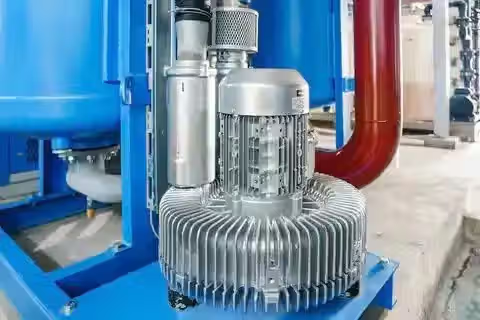
Common equipment can include segregated collection containers, compactors, shredders, crushers, filtration units, centrifuges, settling systems, biological treatment equipment, incineration systems, and material-recovery equipment.
Storage infrastructure can include labeled containers, secondary containment, dedicated waste areas, spill-control equipment, and monitoring instruments. Hazardous materials require controls appropriate to their characteristics.
Digital management tools
Environmental management platforms can track waste quantities, categories, storage locations, transport records, treatment information, and regulatory documentation. Weighing systems can connect physical waste quantities with digital records.
Useful resources include:
- Central Pollution Control Board publications
- State Pollution Control Board guidance
- Ministry of Environment, Forest and Climate Change resources
- India Code legislation and rules
- Bureau of Indian Standards publications
- ISO 14001 environmental-management guidance
- ISO 14040 and ISO 14044 resources for life-cycle assessment
- Equipment manuals and waste-characterization documentation
Waste audits, material-flow diagrams, waste registers, inspection checklists, incident records, and environmental monitoring reports can also support systematic management.
FAQs
What are Industrial Waste Management Systems?
Industrial Waste Management Systems are organized methods for identifying, segregating, storing, treating, recovering, transporting, and disposing of waste generated by industrial activities. They can include physical equipment, procedures, monitoring, documentation, and regulatory controls.
Why are Industrial Waste Management Systems important?
They help control industrial waste and reduce the potential for uncontrolled impacts on soil, water, air, workers, and surrounding areas. They also provide a framework for material recovery and responsible handling of different waste streams.
How is hazardous waste handled in an Industrial Waste Management System?
Hazardous waste is generally identified according to its relevant characteristics and regulatory classification. Appropriate containers, labeling, storage conditions, records, transportation arrangements, treatment methods, and disposal pathways depend on the applicable requirements.
What technologies are used in Industrial Waste Management Systems?
Technologies can include sorting equipment, shredders, filtration systems, wastewater treatment units, sensors, weighing systems, digital tracking platforms, material-recovery equipment, and environmental monitoring instruments.
What are the main industrial waste regulations in India?
India has several waste-specific regulatory frameworks, including the Hazardous and Other Wastes (Management and Transboundary Movement) Rules, 2016, along with frameworks covering plastic waste, e-waste, battery waste, and other categories. The applicable requirements depend on the waste and industrial activity.
Conclusion
Industrial Waste Management Systems provide a structured framework for handling waste from the point of generation through treatment, recovery, and final disposal. Modern systems increasingly combine physical treatment technologies with digital tracking, automated sorting, environmental monitoring, and circular-economy approaches. Indian regulations establish different requirements for hazardous, plastic, electronic, battery, and other waste categories. Proper classification, containment, documentation, monitoring, and compliance are central elements of responsible industrial waste management.