Control Panels: Insights Into Components, Wiring, Automation and Industrial Process Control
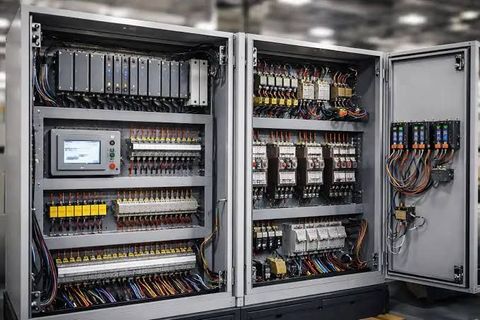
A control panel is an enclosure containing electrical and electronic equipment used to monitor, control, and protect machines or industrial processes. Control panels can be found in manufacturing plants, water treatment facilities, energy systems, material-handling equipment, asphalt plants, food processing facilities, and many other industrial environments.
The development of control panels followed the increasing use of electrical motors and automated machinery. Earlier industrial systems relied heavily on mechanical switches and manual operation. As electrical controls, sensors, programmable logic controllers, and digital interfaces developed, control panels became more capable of coordinating multiple parts of a process.
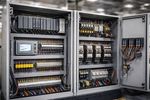
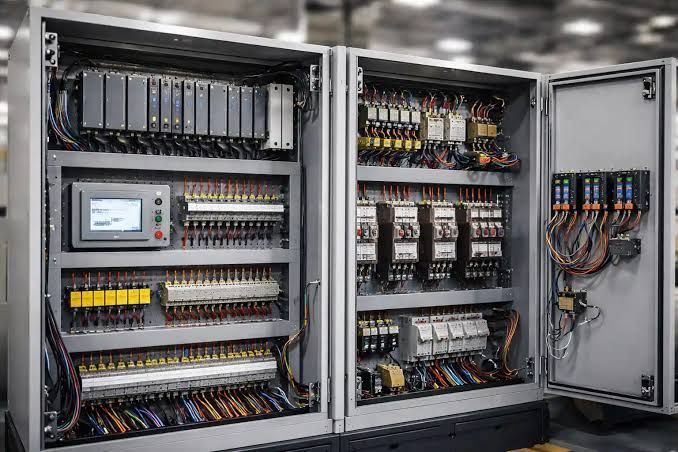
An industrial control panel provides a central location for electrical distribution, control components, monitoring equipment, and protective devices. Its exact arrangement depends on the machinery and process it controls.
Main Components
A typical panel may contain several types of electrical and electronic equipment. Circuit breakers and fuses protect electrical circuits, while contactors and relays control motors and other loads. A programmable logic controller, commonly called a PLC, can receive information from sensors and execute programmed control instructions.
Other components can include power supplies, terminal blocks, motor drives, transformers, switches, indicator lights, communication modules, and operator interfaces. These components work together to allow equipment to operate according to defined sequences.
For example, a conveyor system might use sensors to detect material, a PLC to process those signals, and a motor drive to regulate conveyor movement. The control panel provides the electrical and logical connection between these elements.
Basic Control Process
Industrial process control generally follows a sequence of sensing, processing, and action. Sensors measure conditions such as temperature, pressure, level, speed, position, or flow. The controller interprets these signals and determines what should happen next.
The resulting control signal may activate a motor, open a valve, change a heating level, or stop equipment when a defined condition occurs. This approach allows many industrial processes to operate with limited manual intervention.
Importance
Why Control Panels Matter
Control panels help organize complex electrical and automation systems into a structured arrangement. Without a suitable control system, operators may need to monitor and adjust individual machines separately, which can make coordinated processes more difficult to manage.
In manufacturing, control panels can coordinate motors, conveyors, pumps, heating equipment, sensors, and other machinery. They also provide a location for protective devices that help isolate electrical faults.
Industrial process control can affect product consistency, equipment operation, energy use, and workplace safety. The actual result depends on the equipment design, programming, operating conditions, and maintenance practices.
Wiring and Signal Management
Wiring is a fundamental part of control panel construction. Power wiring carries electrical energy to equipment, while control wiring carries signals between sensors, controllers, switches, and actuators.
Proper separation and identification of different circuits can make inspection and troubleshooting easier. Industrial panels may also use shielded cables or other techniques where electrical interference could affect sensitive signals.
Common wiring considerations include:
Correct conductor sizing.
Appropriate insulation ratings.
Clear terminal identification.
Separation of power and signal circuits.
Proper grounding and bonding.
Protection against mechanical damage.
Organized cable routing.
The exact requirements depend on the electrical system, equipment, installation environment, and applicable standards.
Automation in Industrial Processes
Automation allows control panels to coordinate repeated sequences without requiring an operator to manually activate every individual step. A PLC can receive inputs from multiple sensors and control several outputs according to programmed logic.
Human-machine interfaces, or HMIs, can provide information about equipment status and allow authorized operators to adjust selected parameters. More complex systems may connect the control panel to a supervisory control and data acquisition system, commonly known as SCADA.
| Component | Typical function |
|---|---|
| PLC | Executes programmed control logic |
| Circuit breaker | Protects electrical circuits |
| Contactor | Switches electrical loads |
| Relay | Provides electrical switching or isolation |
| Variable frequency drive | Controls motor speed and operation |
| HMI | Displays process information and controls |
| Power supply | Provides required control voltage |
| Terminal block | Organizes field wiring connections |
| Sensor interface | Receives measurement signals |
| Communication module | Connects control equipment to networks |
Recent Updates
Digital Control Systems
Between 2024 and 2026, industrial control panels have continued to evolve alongside digital automation. Newer systems increasingly combine conventional electrical equipment with PLCs, digital communication, networked sensors, and software-based monitoring.
This development allows information from several machines or process stages to be collected through interconnected control systems. A plant operator may therefore be able to monitor equipment status from a central interface rather than relying only on local indicators.
Industrial Networking
Industrial Ethernet and other communication technologies are increasingly incorporated into automation architectures. These networks can connect PLCs, drives, HMIs, remote input/output modules, sensors, and supervisory systems.
Networked control can reduce the amount of point-to-point wiring required in some installations and can make information available to multiple parts of a plant. However, network design introduces additional considerations involving configuration, cybersecurity, access control, and system reliability.
Data and Predictive Monitoring
Modern control architectures can collect operating information such as motor current, temperature, pressure, vibration, and operating cycles. When analyzed over time, this information can help identify changes in equipment behavior.
Such monitoring does not eliminate physical inspection or maintenance procedures. Instead, it can provide additional information for understanding equipment condition and identifying unusual operating patterns.
Energy Management
Industrial automation is also increasingly connected with energy monitoring. Control panels may incorporate measurement devices that track electrical parameters and communicate them to plant monitoring systems.
Variable frequency drives can regulate the speed of compatible motors according to process requirements. This can change how much electrical energy a motor uses during different operating conditions, although the actual result depends on the motor, load, operating profile, and control strategy.
Laws or Policies
Electrical Requirements in India
In India, industrial control panel installations are influenced by electrical safety requirements, applicable Indian Standards, and regulations governing electrical installations. The Central Electricity Authority's regulations include provisions relating to electrical safety and supply.
The Bureau of Indian Standards publishes standards covering electrical equipment, enclosures, wiring practices, low-voltage assemblies, and related areas. The relevant standard depends on the type and application of the installation.
Panel Construction and Safety
Control panels need appropriate protection against electrical hazards and environmental conditions. Enclosure selection can depend on factors such as dust, moisture, temperature, corrosive surroundings, and the location of the panel.
Protective measures may include circuit protection, grounding, suitable insulation, emergency stopping arrangements, and appropriate separation of circuits. Requirements vary according to the equipment and installation.
Industrial and Workplace Rules
Factories and industrial facilities can also be subject to workplace safety requirements administered under India's applicable occupational and factory legislation. Electrical work may require qualified personnel and controlled procedures, particularly when panels are energized.
Because requirements can vary by state, industry, installation type, and equipment, current rules and applicable standards should be reviewed through the relevant Indian authorities and technical documentation.
Tools and Resources
Electrical Design Software
Engineers commonly use electrical design software to prepare circuit diagrams, panel layouts, wiring schedules, and terminal plans. These documents provide a structured reference for panel construction and maintenance.
A complete electrical drawing may identify power circuits, control circuits, terminal numbers, cable references, protective devices, and connections between field equipment and the panel.
PLC Programming Tools
PLC manufacturers generally provide programming environments for configuring control logic. Depending on the PLC family, programming may use ladder diagrams, function block diagrams, structured text, or other IEC 61131-3 programming approaches.
PLC documentation is important because programming methods, communication protocols, diagnostic functions, and hardware configurations differ among platforms.
Testing and Documentation
Testing equipment can include multimeters, insulation testers, clamp meters, loop calibrators, and other instruments appropriate to the installation. Test procedures should correspond to the equipment and applicable electrical requirements.
Useful documentation can include:
Electrical schematics.
Panel layout drawings.
Wiring schedules.
PLC programs and backups.
Equipment manuals.
Terminal schedules.
Inspection records.
Calibration records.
Change-control documentation.
Keeping these records current can make future troubleshooting and system modifications easier.
FAQs
What are the main components of a control panel?
Common components include circuit breakers, contactors, relays, power supplies, terminal blocks, PLCs, motor drives, communication modules, sensors, and HMIs. The exact combination depends on the industrial process being controlled.
How does control panel wiring work?
Control panel wiring connects power sources, protective devices, controllers, sensors, switches, and controlled equipment. Power circuits carry electrical energy, while control and communication circuits transmit signals and information.
What role does automation play in industrial control panels?
Automation allows controllers such as PLCs to process sensor inputs and operate machinery according to programmed logic. This can coordinate equipment sequences, monitor operating conditions, and respond to defined process events.
What is the difference between a PLC and an HMI?
A PLC executes control logic based on programmed instructions and incoming signals. An HMI provides a visual interface through which operators can view process information and, where authorized, adjust selected controls or parameters.
Why are control panels important for industrial process control?
Control panels provide a structured location for electrical protection, control hardware, communication equipment, and operator interfaces. They allow multiple machines and process stages to be coordinated through defined control logic.
Conclusion
Control panels bring electrical protection, wiring, automation, and process monitoring together within an organized industrial system. Their components can range from basic circuit protection and switching devices to PLCs, motor drives, communication equipment, and digital interfaces. Recent developments have increased the use of networked controls, process data, energy monitoring, and integrated automation. Safe design and operation depend on suitable equipment selection, appropriate wiring, accurate documentation, and compliance with applicable electrical and workplace requirements.